
Automated Invoice Reminders Software That Pays
Automated invoice reminders software helps membership businesses reduce late payments, save staff time, and improve cash flow.
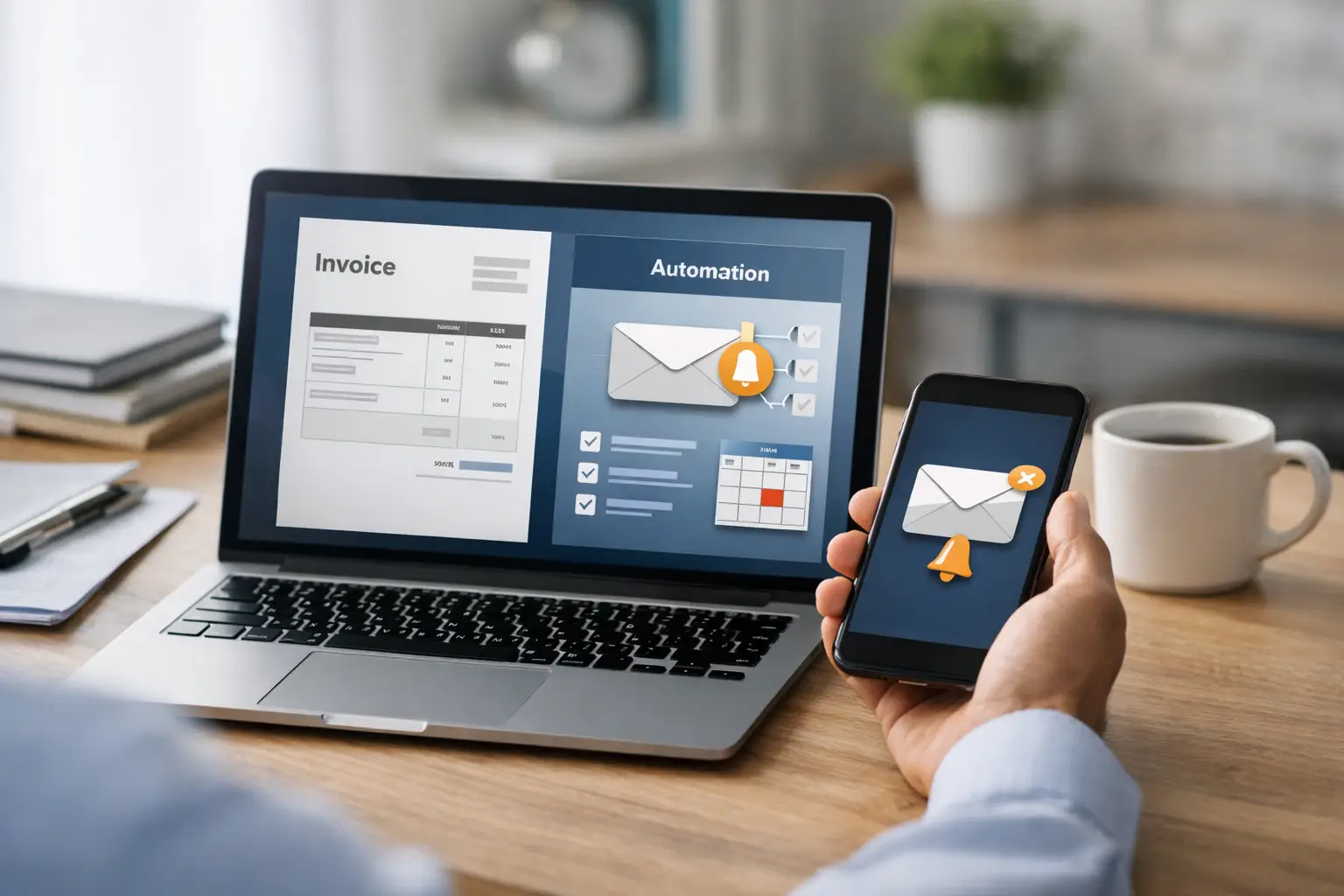
Late payments rarely start as a billing problem. In most gyms, martial arts schools, and fitness studios, they start as an attention problem. Staff are helping members at the front desk, coaches are running classes, managers are chasing reports, and unpaid invoices sit in the background until they become a bigger revenue issue. That is where automated invoice reminders software changes the equation. Instead of relying on manual follow-up, sticky notes, or scattered email chains, operators can build a consistent collection process that runs on time and at scale.
For membership-based businesses, reminders are not just about asking for money. They protect recurring revenue, reduce awkward staff conversations, and give members a better experience by keeping communication timely and clear. The right system does more than send a message. It supports the entire payment workflow, from invoice generation to reminders, retries, reporting, and account visibility.
What automated invoice reminders software should actually solve
If your business sends invoices but still depends on staff to remember who needs a follow-up, you do not have a reliable billing process. You have a manual exception process. That might work when you have 50 members. It breaks down fast when you have hundreds of active accounts, family plans, class packs, annual fees, equipment charges, or past-due balances spread across locations.
Automated invoice reminders software should solve three operational problems at once. First, it should reduce missed or late payments by sending reminders before and after due dates. Second, it should eliminate repetitive admin work so your team is not spending hours every week chasing balances. Third, it should improve visibility so managers can see what is due, what has been collected, and where follow-up is failing.
That last point matters more than many operators expect. A reminder tool that sends emails but does not connect to your invoicing, customer records, and reporting may create activity without creating control. You need to know whether reminders are leading to payments, whether certain invoice types are aging faster, and whether specific locations or member groups need a different workflow.
Why automated invoice reminders software matters for membership businesses
A one-time invoice is simple. A membership business is not. Revenue comes from recurring dues, retail purchases, annual renewals, upgrade fees, testing fees, event charges, and other add-ons. Billing is tied to attendance, freezes, cancellations, payment methods, and account status. That complexity is why reminder automation needs to live inside a broader operational system, not sit off to the side.
For a martial arts academy, for example, one overdue balance can affect more than cash flow. It can create front-desk confusion at check-in, lead to inconsistent enforcement across families, and put staff in the uncomfortable position of discussing payments in person when the issue could have been handled digitally days earlier. In a fitness studio or gym, late invoices often pile up when failed payments are not followed by immediate communication and a clean recovery path.
Strong reminder automation keeps those issues from spreading. Members get notified early. Staff see account status in real time. Management can track collection performance without building separate spreadsheets. That is how software stops being a billing tool and starts becoming a revenue operations asset.
The features that make the difference
Not all reminder workflows produce the same results. The basic version sends a generic email when an invoice is overdue. That is better than nothing, but it leaves money on the table. The better approach is automation that is timed, configurable, and connected to the rest of your billing process.
Start with scheduling logic. You want reminders before the due date, on the due date, and after the due date based on your business rules. Some accounts need a softer approach with early notice. Others need faster escalation because the service is recurring and the balance impacts future billing.
Message flexibility matters too. A family account with an annual membership fee should not receive the same reminder as a monthly member with a failed autopay attempt. Software that lets you tailor communication by invoice type, aging stage, or account status gives you more control and usually better payment outcomes.
Payment enablement is just as important as communication. A reminder should lead directly to action. If a member receives a notice but then has to call the office or wait for business hours to resolve it, you create friction right at the point of collection. The strongest systems make it easy to pay, update a card, or review the balance immediately.
Then there is reporting. Operators need to see open invoices, aging buckets, reminder history, payment trends, and team performance. Without that, reminders become invisible background automation. With it, they become measurable levers for improving cash flow.
What to look for beyond reminders
This is where many businesses make the wrong software decision. They look for a narrow reminder tool when the real need is broader billing control. If your reminders are not tied to invoices, customer records, recurring billing schedules, payment processing, and account notes, your team still ends up stitching together the full picture manually.
For membership businesses, the better investment is a centralized platform that combines invoicing, billing automation, CRM-style account management, and operational reporting. That means your team can see whether a member is active, whether they checked in, whether their payment method failed, whether a reminder was sent, and whether the balance has been resolved. Everything lives in one workflow.
That centralization pays off quickly. Front-desk staff spend less time searching for answers. Managers get cleaner reporting. Owners gain more confidence in revenue forecasting because past-due accounts are not buried in disconnected systems. If you operate multiple locations, the benefit grows even more because processes become consistent across the organization.
The trade-offs operators should think through
Automation is not the same as neglect. If reminders are too aggressive, they can frustrate good members who simply missed a due date or had a card expire. If they are too passive, they do not improve collections enough to matter. The right setup depends on your billing model, average invoice size, and member relationship.
There is also a difference between reducing admin work and removing human oversight. Your team should not manually send every reminder, but they should still be able to review exceptions, high-risk accounts, and long-aging balances. Good software handles the repeatable work and gives your staff visibility into where personal outreach is still worth it.
Another trade-off is implementation depth. A standalone reminder tool may be faster to start with, but it often creates limitations once your business grows. A full platform takes more thought upfront, yet it usually delivers better financial control because billing, reminders, payment recovery, and reporting work together.
How the right system improves collections and operations
When reminder automation is done well, the financial upside is obvious. More invoices get paid on time. Fewer balances age into harder collections. Staff spend less time following up. But the operational benefits are just as valuable.
Your team can standardize communication instead of improvising it. Managers can identify billing bottlenecks before they affect monthly revenue. Members get a more professional experience because notifications are prompt, consistent, and tied to clear next steps. That improves trust, especially in businesses where payments are recurring and relationships are long term.
This is also where platforms like BillingLogix fit naturally. For member-based businesses, invoice reminders should not operate as an isolated feature. They should be part of a system that supports recurring billing, account management, reporting, check-in workflows, and payment optimization in one place. That is how you reduce friction across the business, not just inside accounts receivable.
Choosing automated invoice reminders software with a revenue mindset
The best buying question is not, does it send reminders? Most tools can do that. The better question is, does it help us collect faster, reduce staff workload, and give us better control over member revenue?
That standard changes what matters. You start evaluating whether reminders are automated by rule, whether they trigger based on actual billing events, whether they support self-service payment updates, and whether reporting gives you a clear view of open balances and recovery performance. You also look at usability. If your front-desk team cannot work with it confidently, the software will create workarounds instead of efficiency.
For growing gyms, studios, and academies, the smartest move is usually to choose software that treats billing as an operational core, not a back-office afterthought. When reminders, invoices, memberships, and payments all live in the same system, collections become more predictable and growth becomes easier to manage.
If late payments are still being handled with memory, manual follow-up, and crossed fingers, that is your signal. The right software does not just remind members to pay. It gives your business a cleaner, faster, more profitable way to run.