
Point of Sale Software for Gyms That Pays Off
Point of sale software for gyms should do more than ring up sales. See which features improve billing, retention, reporting, and profit.
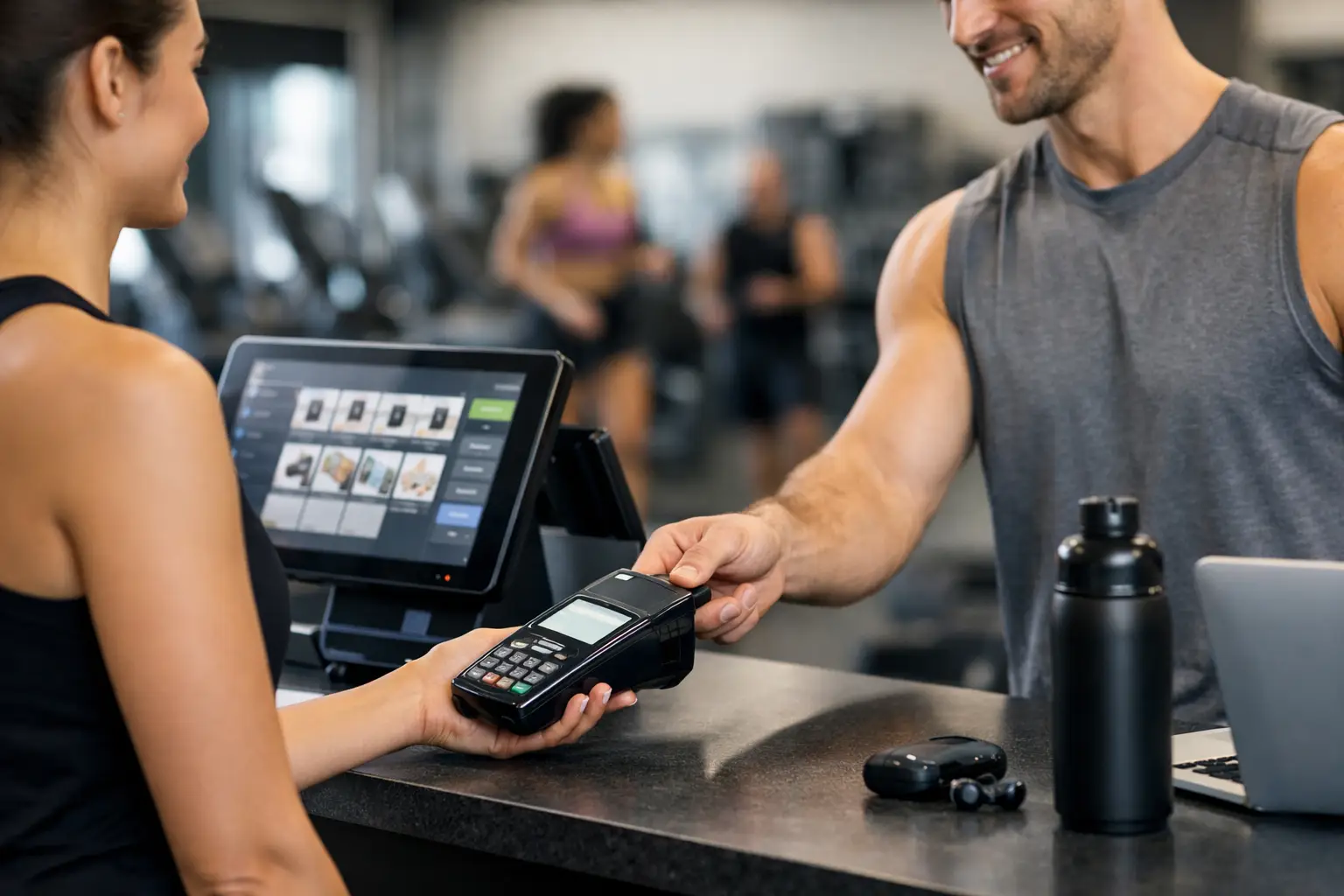
A busy front desk can hide expensive problems. A membership gets entered twice. A declined card sits untouched for a week. A retail sale closes, but inventory never updates. A coach needs attendance data, while ownership wants clear revenue numbers by location. If your point of sale software for gyms only handles transactions, it leaves real money and control on the table.
For gym operators, POS software is not just a checkout tool. It sits at the center of daily operations - sales, memberships, recurring billing, check-ins, staff permissions, reporting, and collections all run through it. When those functions live in separate systems, the friction shows up fast in missed payments, duplicate work, poor visibility, and a member experience that feels more manual than modern.
That is why choosing the right platform is less about bells and whistles and more about operational fit. The best system helps your team move faster at the front desk, gives management better financial visibility, and turns billing into a controlled process instead of a weekly cleanup project.
What point of sale software for gyms should actually do
A gym has a different workflow than a standard retail business. You are not just selling protein bars, apparel, or day passes. You are managing recurring memberships, family accounts, class access, staff roles, payment failures, attendance history, and often multiple revenue streams under one roof.
That changes the standard for what a POS needs to handle. A basic terminal can process a transaction, but it cannot support the operational rhythm of a membership business. Gym owners need software that connects the sale to the member record, applies the correct billing logic, updates access permissions, and reflects the change in reporting right away.
In practical terms, that means the software should support one-time purchases and recurring billing in the same workflow. It should let staff enroll a new member, collect initial fees, store payment details securely, have documents signed, and set the ongoing billing schedule without switching between systems. It should also help staff handle account changes without creating confusion, whether that means freezing a membership, upgrading a plan, applying credits, or moving a member to a different program.
The value is not only speed. It is consistency. Every manual workaround introduces room for missed revenue and staff error.
The revenue problems the right gym POS can fix
Most gym operators do not start shopping for new software because they want more features. They start because the current setup creates drag. Payments fail and nobody follows up quickly enough. Front-desk staff spend too much time correcting accounts. Reports do not match. Owners cannot get a reliable view of EFT revenue, outstanding balances, or product sales without exporting data and rebuilding the numbers manually.
Good point of sale software for gyms addresses those issues at the system level.
Billing is one of the clearest examples. If your software only captures payments but does not actively manage recurring collections, your team ends up chasing declines by hand. That is expensive. Smart billing automation can retry failed payments, trigger follow-up workflows, and keep account status visible so your staff knows exactly what needs attention. A small improvement in collections often has a larger financial impact than adding a few new memberships.
Reporting is another major gap. Gym operators need more than a daily sales total. They need to see drafted revenue, unpaid balances, membership growth, retention trends, attendance patterns, and staff activity. If the software can show those numbers in real time, managers make faster decisions. If it cannot, the business runs on assumptions.
Then there is payment cost. Many gyms accept high processing fees as a fixed expense because their systems give them no flexibility. A more advanced platform can reduce merchant costs through better payment optimization and pricing strategies, which directly improves margin without changing membership volume.
Features that matter most in gym POS software
Some features sound impressive in a demo but do little for day-to-day operations. Others quietly improve profit, accountability, and staff efficiency every single week.
Membership management is one of the non-negotiables. Your POS should not treat members like one-time customers. It should track plan details, status, billing history, family relationships, notes, documents, and activity in one place. When a front-desk employee opens an account, they should see the full picture immediately.
Integrated check-in tools matter for the same reason. Attendance is not just a convenience feature. It helps you monitor usage, support retention efforts, validate program access, and identify members who may be drifting toward cancellation. For gyms with classes, specialized training tracks, or youth programs, attendance data becomes even more valuable.
Role-based permissions are often overlooked until something goes wrong. Not every employee should be able to refund transactions, edit billing settings, or change account balances. Strong team permissions and audit logging protect revenue and create accountability, especially in multi-location environments where multiple staff members touch the same member records.
Document signing and invoicing also deserve more attention than they usually get. Waivers, membership agreements, policy acknowledgments, and custom invoices are part of normal gym operations. If your team still handles these through separate apps or paper forms, the process is slower and harder to track.
Finally, inventory and retail tools should work without becoming the center of the system. Many gyms sell merchandise, drinks, gear, or add-on services. Those sales matter, but they should tie back to a member profile and broader reporting structure rather than living in a disconnected retail module.
Why all-in-one systems usually outperform patchwork setups
A lot of gyms end up with separate tools for billing, check-in, CRM notes, retail transactions, staff scheduling, and reporting. On paper, each tool solves a specific problem. In practice, the team spends its time bridging gaps between them.
That patchwork approach creates hidden costs. Staff re-enter data. Management loses confidence in reporting. Member updates get missed because one system syncs late or not at all. When a chargeback or billing dispute happens, the audit trail is incomplete and hard to verify.
An all-in-one platform reduces that friction because every action connects to the same account record and operational logic. A membership sale updates billing. Billing status affects account visibility. Check-in activity supports retention outreach. Reporting reflects the full picture without manual reconciliation.
This matters even more as a gym grows. A single-location operation may be able to tolerate some inefficiency. A multi-location business usually cannot. Standardizing processes across locations requires consistent controls, clean permissions, centralized reporting, and software that supports oversight without slowing down local teams.
What to ask before you choose a system
The right buying question is not, “Can this process payments?” Almost every platform can. The better question is, “What parts of the business become easier, more accurate, and more profitable once this system is live?”
Ask how the software handles recurring billing failures. Ask whether front-desk staff can complete a full member signup in one flow. Ask how refunds, freezes, transfers, upgrades, and family accounts are managed. Ask what reporting is available without exporting data. Ask how permissions work across managers, sales staff, and coaches. Ask whether the system supports digital forms, check-ins, and operational notes tied to the account.
You should also look closely at onboarding and adoption. A feature-rich system still needs to be usable in the real world. If setup is confusing or workflows are hard to learn, staff will fall back into manual habits. The best platforms pair depth with clarity so teams can use advanced capabilities without creating new bottlenecks.
For many operators, payment strategy should be part of the evaluation too. Software decisions affect merchant fees, cash flow timing, and collection rates. Those are not side issues. They shape profitability every month.
The business case is bigger than checkout
When gym owners think about POS software only as a front-desk tool, they tend to underinvest and then compensate with more admin labor. That usually costs more over time. The stronger approach is to view the system as revenue infrastructure.
The right platform helps you collect more of what you have already sold, reduce staff workload, improve reporting accuracy, tighten operational control, and give members a smoother experience from signup to renewal. That is a meaningful return, especially in businesses where retention, collections, and process discipline drive long-term profit.
BillingLogix is built around that reality. It combines POS, membership management, billing automation, reporting, payments, and oversight tools in one system so gym operators can streamline operations and keep a tighter grip on revenue.
If you are evaluating software, look past the register screen. The real test is whether the system helps your team run a cleaner, faster, and more profitable gym every day.