
POS Software for Training Centers That Drives Revenue
Choose POS software for training centers that unifies payments, memberships, attendance, reporting, and staff controls to grow revenue with confidence.
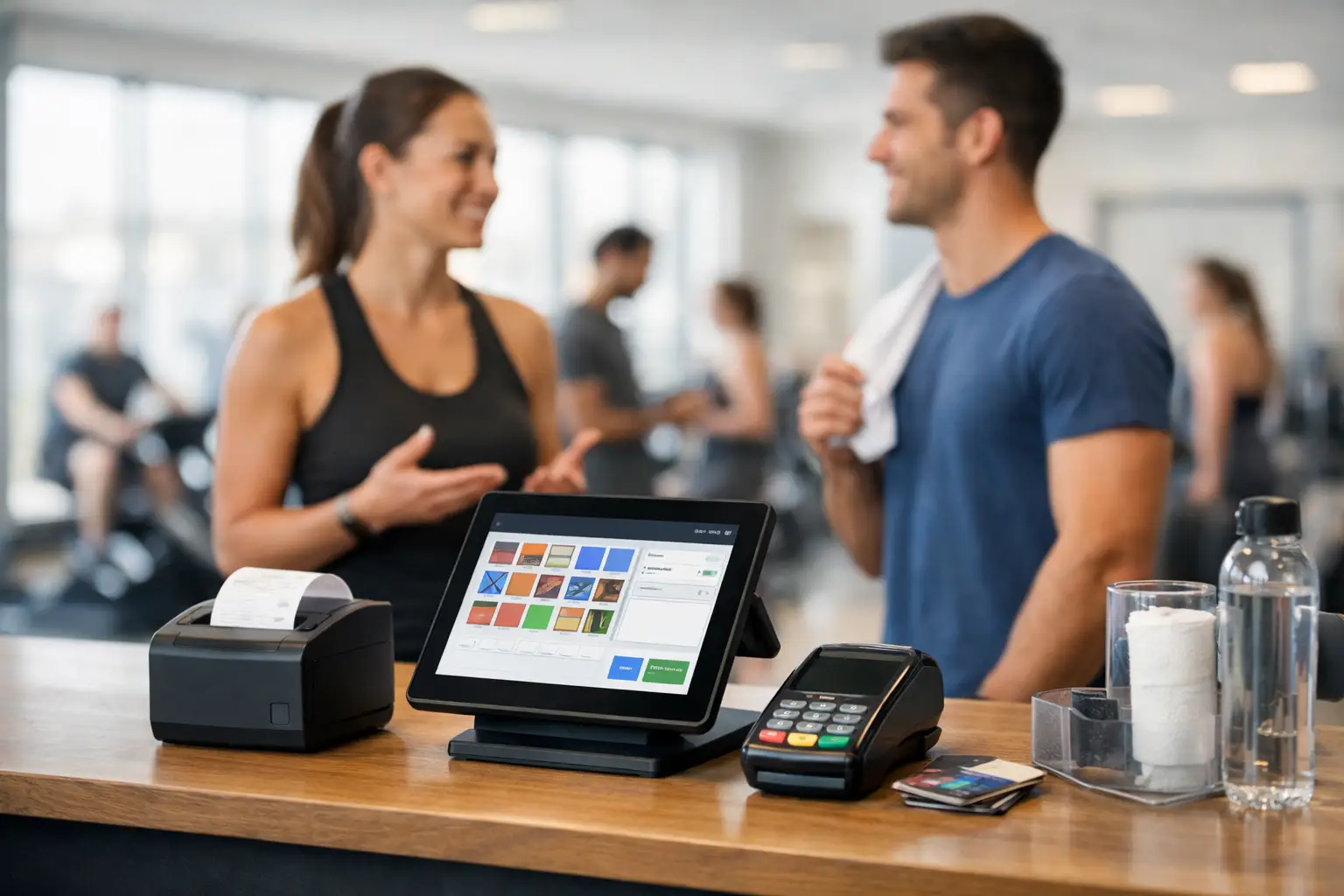
A training center can lose revenue long before a member cancels. It happens when an expired card goes unnoticed, a trial student is not followed up with, a retail sale never reaches the system, or attendance data lives somewhere the owner never checks. The right pos software for training centers turns those small operational gaps into controlled, measurable workflows.
For martial arts academies, gyms, fitness studios, and multi-location programs, a basic cash register is not enough. Your business runs on recurring memberships, scheduled classes, progression milestones, family accounts, staff access, and reliable collections. Your POS should be built around that reality.
Why training centers need more than a standard POS
A conventional POS system is designed to ring up transactions. That is useful for gloves, uniforms, drinks, private lessons, and enrollment fees, but it does not manage the full member relationship. Training centers need visibility from the first lead through every payment, check-in, renewal, upgrade, and cancellation conversation.
When billing, attendance, and customer records are spread across separate tools, the front desk spends too much time switching screens and fixing avoidable errors. Owners lose a clear view of who owes money, which programs retain members, and whether each location is actually performing.
A purpose-built platform brings those functions together. The result is not simply faster checkout. It is stronger collections, cleaner records, more consistent service, and better decisions based on current operational data.
What POS software for training centers should handle
The best fit depends on your business model. A single-location martial arts school may prioritize belt rank tracking and family billing, while a growing fitness brand may need location-level reporting and detailed staff permissions. Still, the core operational requirements are consistent.
Recurring billing that protects cash flow
Membership revenue is the foundation of most training centers. Your software should automate recurring billing schedules, securely store payment methods, retry failed payments intelligently, and give staff a clear queue for exceptions that need attention.
Look for controls that make billing practical, not just automatic. Staff should be able to see a member's balance, payment history, active agreement, and upcoming charge without digging through separate records. Owners should be able to identify delinquency trends before they become a cash-flow problem.
Payment processing also deserves scrutiny. Processing fees can quietly erode margin across hundreds or thousands of recurring transactions. Evaluate available payment strategies, fee visibility, dispute workflows, and the ability to apply a zero-processing-fee approach where appropriate for your operation.
Memberships, family accounts, and agreements
Training centers do not sell one-size-fits-all subscriptions. They sell individual memberships, sibling programs, limited class packages, annual agreements, upgrades, add-ons, and private coaching. Your POS must support those options without forcing staff into manual workarounds.
A member record should act as a complete operating profile. It should connect contact details, billing information, signed documents, attendance history, program enrollment, notes, and account status in one place. For families, parents or guardians should be able to manage payments and communication without creating duplicate records for each child.
Digital document signing matters here as well. Enrollment agreements, liability waivers, policy acknowledgments, and cancellation forms should be tied to the account and easy for authorized staff to retrieve. That improves consistency and creates a clearer record when questions arise later.
Attendance and student progress
Check-in data is one of the most valuable signals in a membership business. A member who stops attending may be at risk of cancellation even if their card is still being charged. A member who checks in consistently is a stronger candidate for an upgrade, retail purchase, or referral request.
Your system should make check-ins fast at the front desk while giving managers useful attendance reporting. For martial arts programs, level, belt rank, testing eligibility, and progression notes should connect to the student record. For fitness and studio operators, class attendance should help identify capacity trends and members who need re-engagement.
The trade-off is complexity. Do not buy a system with elaborate tracking features your team will never maintain. Choose reporting and progress tools that reflect the way instructors and front-desk staff already operate, then standardize the process around them.
Retail, services, and quick transactions
Membership billing may drive predictable revenue, but retail and service transactions increase member value. POS software should make it easy to sell merchandise, event registrations, testing fees, guest passes, and private sessions from the same account used for membership management.
That connection matters. If a member buys a uniform, enrolls in a camp, or pays for a testing event, staff should not need to create a second customer record. A unified transaction history gives your team better context and gives leadership a more accurate view of revenue per member.
Inventory controls can be helpful if retail is a meaningful part of the business. If you only sell a small number of branded items, simple stock alerts may be enough. Larger academies and multi-location operations may need inventory reporting by location, product, and staff member.
The operational controls owners should not overlook
Feature lists can make every platform sound similar. The difference often appears in the controls that protect the business after implementation.
Role-based permissions help ensure staff members only see and change what their jobs require. A front-desk employee may need to process payments and check in students, while a manager can adjust agreements, issue refunds, or review location performance. Audit logs add accountability by showing who changed an account, modified a payment, or updated a membership.
For operators with multiple locations, centralized oversight is essential. You need the ability to compare collections, active memberships, attendance, failed payments, and sales performance without assembling spreadsheets from every site. At the same time, location managers need access to the data that helps them run their teams effectively.
Reliable integrations are also part of the evaluation. Think about the systems your team already uses for communication, accounting, access control, marketing, or scheduling. The goal is not to add integrations for their own sake. The goal is to remove duplicate data entry and reduce the chance that important member information falls out of sync.
How to evaluate a platform before you commit
The best sales demo is based on your real workflows, not a generic feature tour. Ask the provider to show what happens when a new family enrolls, a payment fails, a student changes programs, a staff member needs to locate a signed waiver, and an owner wants to compare this month's collections with the prior month.
Use these questions to pressure-test the platform:
- Can the system manage recurring billing, failed-payment follow-up, invoices, and one-time sales from one account record?
- Can staff check in members quickly while seeing alerts for past-due balances, missing waivers, or account notes?
- Can you report on active members, collections, attendance, churn risk, sales, and payment performance without exporting data?
- Can permissions, audit history, and location controls scale as you add staff and facilities?
Also ask about implementation. Data migration, staff training, payment setup, and member communication can determine whether a new system creates momentum or disruption. A platform should be powerful, but its daily workflows must be clear enough for a busy front desk to adopt quickly.
Turn data into retention and revenue action
Software only creates value when your team uses its information to make decisions. Build a simple operating rhythm around the numbers. Review failed payments daily, monitor attendance gaps weekly, and review membership growth, cancellations, and sales trends monthly.
For example, attendance reports can trigger a member outreach process after a defined period of inactivity. Billing reports can guide your collections follow-up before balances age. Retail reports can show which products deserve more shelf space and which ones tie up cash. These actions are small, but they compound when every location follows the same process.
BillingLogix brings membership management, automated billing, POS transactions, check-in tools, reporting, document signing, and operational controls into one system designed for this kind of business. That centralization gives operators less administrative friction and a stronger line of sight into the revenue they have already earned.
The right POS is not just a checkout tool sitting at the front desk. It is the operating system behind a more disciplined training center. Choose software that helps your team collect on time, serve members with context, and act on the signals that keep revenue moving forward.